In terms of sociology we see race as more of a social identity. This identity is made of many factors, such as, nationality, religion, language, and traditions. These parts of the social identity are mostly imposed upon a person in their upbringing and from the people who are around them, but a person can choose to shift views in order to build their own "race". In biological terms race can be defined as a person's physical features and who they are similar to. This definition is much harder to pin down due to the sheer variance in the human species, and the differences with much smaller groups of human. Compounding this issue is the fact that there are no single traits that define any race as unique, all traits can be found else where. However, through the use of basic grouping people can be put into broad groups based up skin color, skull shape, and body proportions.
The IAT tests that we took showed us who we favor most in our daily interactions. This was done through positive/negative word associations with the faces of different races. The goal was to see which group was more favored, through faster responses to a positive word. These tests proved to be accurate in that they confirmed the biases that i was already aware that i had. For example, I had a moderate preference of skinny people to fat people. This in no way surprised me, for I know that fat people have always irritated me to no end.
In the area of blacks being better athletes, I think it boils down to training and tradition. In the training aspect one never gets far in athletics without a proper background of good workouts, nutrition, and support. Another factor in athletic success is in tradition, for one's purest expression of their self in in their physical movements and interactions. So if someone always has to fight and scrap in order to get ahead, this will be shown in their athletic performance. This can be seen in American boxing, for as we saw in the most recent video we watched in order to predict the race of the boxing world champ one only has to know the race that is currently on the bottom of the social ladder.
Through this class I had learned to take a slightly less individualistic approach to looking at people, for I have seen how people are a result of the culture in place around them and not just who that person wants to be. For example, I was always angry with the the lowest of the social classes that solely relied of welfare to live, but through this class I can now step back and see how it is the societal system that keeps these people where they are and not just them being resistant to change.
Tuesday, May 24, 2011

Thursday, May 5, 2011
Divide and Conquer - How the Snack Food Came to Power
In "Divided We Eat", Lisa Miller details her dietary habits as well as the eating patterns of the United States as a whole. She does this to show the divide between the rich and the poor, in terms of the foods that they eat. Lisa eats on the upper end of the food quality spectrum, this is done by eating organic, locally grown foods. These foods are also very nutrient rich, and are always fresh. On the other side of the divide, we find the poorest Americans, those who struggle to keep a roof over their heads, and who rely heavily on food stamps. These Americans are pushed into to buying more efficient foods (efficient being cost per calorie). These foods such as pizza, cakes, soda, and potato chips fill the proverbial hole, but lack the nutrition that constitutes a solid diet. This leads to several issues, the first is an entire class of children who are not learning correct eating habits, and as a result they will pass these habits to their children. Another issue with this system is that these children who are growing up eating these junk foods are more than often overweight (or obese) which only leads to further health complications down the road. Lastly, these eating habits do not support local farmers and food producers, only large corporate farming aggregates and big box stores are supported. Miller acknowledges the fact that this disconnect can not be solved overnight, but she does assert that some action must be taken in order to improve the food choices of the poor.
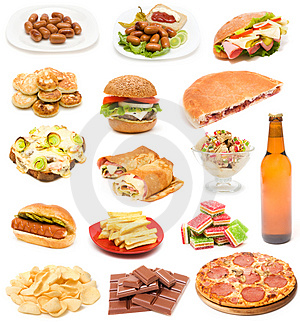 |
| Tasty and dollar-per-calorie efficient, but not healthy at all. |
This same concept was demonstrated in class this week, in the "People Like Us" video. For in Burlington, VT the residents had a large dispute over what grocer was to take the place of a big box store that had failed. The two choices were another chain supermarket, or a co-op market where local farmers and bakers could sell their goods. The main conflict came down to what bread the new store would retail. Residents with lower income were concerned that the co-op would not sell the 99 cent loaves of white bread that they rely on. This shows how the lower income levels of society cannot always afford the most healthy or conscious foods available. This is also a warning, for if the current grocery system is not fixed then we will have severe health and economic problems on our hands (and worse than the health and economic problems we currently face).
Why exactly white bread is not healthy: click on me
A parallel can be seen in this dietary issue and the recent Cairo, IL levee issue. Where several miles of miles of levee were to be destroyed in order to save the town of levee, but the destruction of this levee would flood several hundred thousand acres of MI farmland. However, a state representative was willing to allow Carol to be washed away, only because of its lackluster appearance and low social class citizens. This is similar to the food debate in that upper class citizens are allowing the lower classes to fail, just because they are doing well in their own right.
 |
| Cairo, IL yesterday. |
Friday, April 15, 2011
Conquering the Cool
The clothing that men wear is often dictated by the time period in which they live, their social standing, and the culture which they are a part of. These factors play a role in the larger scale of men's fashion. However, these factors do not tell the whole story of the evolution of men's clothing, which is dependent on many factors within a society.
This development can be seen in our everyday lives, for men do not dress nearly the same as we did fifty years ago. As American society becomes more and more casual, the norms of what is "proper" for one to wear as loosen. For example, look at what school children wore in the 1950s and compare that to what you see today. In the 1950s, we see all collared shirts on the boys (tucked in of course), every boy is wearing a belt, and has short, well-kept hair. This differs greatly from today, where it is now acceptable for a boy to wear athletic shorts and t-shirt to school. Even through this shift to a more casual day-to-day interaction, there is still pressure to dress up a bit for special situations, such as a nice dinner with one's family or a date with a lady friend.

In class we saw this in the 1950's How to Date videos, in which "looking one's best" was of primary importance. This value remains today, in that one will dress up for a date and make efforts to clean up, but wearing a collared shirt and pressed pants is slightly excessive. The videos also stressed being sociable and friendly as a large part of being successful in dating situations. This value is ever present in today's society as well, although is has deteriorated a bit, due to one's outside image not being the sole point of contention for a person.
Advertising in today's world is constant and oppressive. We find ourselves saturated with media. The media itself is not the issue, it is the fact that nearly all the media that we encounter is commercial media. This removes any harmless tag associated with it, for no longer are is media created for media's sake, but now it is all created for money. This removes most of the artistic motive behind movies, TV shows, even more traditional 2D art. For now, the main concern is no longer personal expression or voice but rather it is "how will this sell?". This shift endangers one's control of a "free mind", for we are not exposed to ideas but to products, services, etc.

This development can be seen in our everyday lives, for men do not dress nearly the same as we did fifty years ago. As American society becomes more and more casual, the norms of what is "proper" for one to wear as loosen. For example, look at what school children wore in the 1950s and compare that to what you see today. In the 1950s, we see all collared shirts on the boys (tucked in of course), every boy is wearing a belt, and has short, well-kept hair. This differs greatly from today, where it is now acceptable for a boy to wear athletic shorts and t-shirt to school. Even through this shift to a more casual day-to-day interaction, there is still pressure to dress up a bit for special situations, such as a nice dinner with one's family or a date with a lady friend.
In class we saw this in the 1950's How to Date videos, in which "looking one's best" was of primary importance. This value remains today, in that one will dress up for a date and make efforts to clean up, but wearing a collared shirt and pressed pants is slightly excessive. The videos also stressed being sociable and friendly as a large part of being successful in dating situations. This value is ever present in today's society as well, although is has deteriorated a bit, due to one's outside image not being the sole point of contention for a person.
 |
| Ready for action. |
Advertising in today's world is constant and oppressive. We find ourselves saturated with media. The media itself is not the issue, it is the fact that nearly all the media that we encounter is commercial media. This removes any harmless tag associated with it, for no longer are is media created for media's sake, but now it is all created for money. This removes most of the artistic motive behind movies, TV shows, even more traditional 2D art. For now, the main concern is no longer personal expression or voice but rather it is "how will this sell?". This shift endangers one's control of a "free mind", for we are not exposed to ideas but to products, services, etc.
Thursday, April 7, 2011
Gender Roles - The World As Our Stage
"All the world's a stage,`and all the men and women merely players" - William ShakespeareIn Leigh S. Shaffer's From Mirror Self-Recognition to the Looking-Glass Self: Exploring the Justification Hypothesis, we see how individuals shape their behavior based upon the "reflections" they see of themselves in others reactions to them. This shows how man is a purely social creature, for without those reflections, he could not "see" himself.This principle can be seen in how a gender's specific roles are displayed by individuals in today's society. Just like actors, people "learn to manage the impressions of others in the improvised roles of everyday life" (Leigh). This skill of managing others impressions is paramount in surviving modern-day interactions. One must always be cognisant of what others see in them. This awareness allows for one to construct an image of them self, which, in turn, can then be used by that individual to preform better in social situations. 
I see this in my daily interactions as well. Over the years, I have constructed an image of what I am, both physically and mentally. This image serves me well, for I am aware of my strengths and weaknesses. Which allows me to know when to push an issue, or perhaps, let it mellow out a bit. This approach does hamper my interactions, for I know my weaknesses, so I will try my hardest to avoid them. This helps to lead an "easier" life, but what fun is that? By improving upon my faults, I can improve my daily life, and further augment my mental self image. The goal is to increase my comfort with myself. This is all a way in which I "manage the impressions of others".This management can also been seen in the study of gender roles, for as children we learn to balance many factors (from parental lessons to societal expectations) in the construction of our self. We watch films that show large, heavily muscled men rescuing a defenseless, but beautiful, princess. These images stick with young children, and they assume that this is the way the real world works. This can lead to a disillusioned view on gender roles and a distorted view of one's body.Interesting study on ideal muscle mass from Harvard: hereThis distorted body view carries with it some major consequences, for as a jury begins its talk on Barry Bond's perjury charges, one cant help but to consider the consequences this will have. Steroids have been in use since 1950's, when the Russian Olympic team made an incredible debut performance in the 1952 Olympics. The use of these drugs has only increased since then. With widespread media coverage and references, one cannot help but to be bombarded with images of a "magical muscle builder". This leads young athletes looking for an edge to consider an aid to their performance, in the form of steroids. This is the wrong path, for steroids are only effective when an athlete intends on training above, and beyond, the normal human limits of recovery and intensity. However, in a society filled with "miracle pills" and dreams of grandeur, who can really blame these kids? | Who doesn't fit? |
Thursday, March 10, 2011
Language - Shaped Thoughts Due to a Limited Language
The language we speak is not solely a device through which we communicate idea, but rather it is a lens through which we view the world. This lens varies from language to language, resulting in cultures that have different value systems, solely based upon a different vocabulary. As a society, we also have norms regarding how we go about discussions of particular subjects, such as art, logic, and law. However, these norms greatly vary from culture to culture, and are subject to the limitations of any particular language.
A great video I found on TED some months ago: The Secret Powers of Time
In my Logic class we have spent entire periods discussing the word choices that an author makes. This can be seen in George W Bush's address to the American People after the attacks of September 11, 2001:
This was seen in the Do You Speak American? video, in which Bill Clinton was studied for his use of dialect. As being fluent in both "standard" American English and English with and Arkansas accent. This allowed him to be an effective speaker in many situations, for in addressing fellow leaders and politicians he could use his flat English to convey a serious tone. On the other hand, while speaking to the American People, Mr. Clinton could revert to his Arkansas accent, which would allow to to gain a familiarity with the people and avoid any threatening tones.

This language conflict can be seen today, most notably in the American value system. In America, we value progress, integrity, and studiousness. This can be attributed to a strong vocabulary in those terms. Some languages may lack the capacity to describe the notion of progress. Not to say that the language is entirely lacking in certain feature, it just may be weak. This can be see in philosophical discussions, in which words like university, idea, and moral, all become rather meaningless. This demonstrates how a language may be lacking in certain aspects, limiting its use.
In my Logic class we have spent entire periods discussing the word choices that an author makes. This can be seen in George W Bush's address to the American People after the attacks of September 11, 2001:
"I've ordered that the full resources of the federal government go to help the victims and their families and to conduct a full-scale investigation to hunt down and to find those folks who committed this act."Folks. The use of the words folks in this statement instantly changes the entire "texture" of this speech, for the American Public feels as if they are being talked with, rather than being talked at.
This was seen in the Do You Speak American? video, in which Bill Clinton was studied for his use of dialect. As being fluent in both "standard" American English and English with and Arkansas accent. This allowed him to be an effective speaker in many situations, for in addressing fellow leaders and politicians he could use his flat English to convey a serious tone. On the other hand, while speaking to the American People, Mr. Clinton could revert to his Arkansas accent, which would allow to to gain a familiarity with the people and avoid any threatening tones.
This language conflict can be seen today, most notably in the American value system. In America, we value progress, integrity, and studiousness. This can be attributed to a strong vocabulary in those terms. Some languages may lack the capacity to describe the notion of progress. Not to say that the language is entirely lacking in certain feature, it just may be weak. This can be see in philosophical discussions, in which words like university, idea, and moral, all become rather meaningless. This demonstrates how a language may be lacking in certain aspects, limiting its use.
Thursday, March 3, 2011
Food - To Sustenance and Beyond
We live through what we eat, and as a result "we are what we eat". This statement can be interpreted as either, the food we eat becomes part of out bodily structures or that our dietary choices reflect who we are as people. Both of these sides are established, however it is the latter that Leon Rappoport chooses to support and elaborate upon in his essay "How We Eat".


In this essay, we see how the food choices we make are the result of factors beyond the biological necessity for fuel. For example, this can be see in our choice of comfort foods. In that we usually choose starch heavy foods for they "are metabolized much more slowly then sugars and have a calming effect on the emotions". This is a demonstration of how food choice is a reflection of an internal, emotional desire.
Choices in diet can also be see as an external indicator of one's gender identity, when viewed through the paradigm of classic sexism. So foods such as fruit, yogurt, and salads, maintain a more feminine connotation. Whereas, heavy foods like corned beef, steak, and spinach, maintain a masculine image.
I would agree with the paragraph above, for I have seen it my own personal experience. In class we talked about social expectations, and that other will judge us upon a set of established norms. These norms are reflected in the foods that it is "acceptable" for one to eat. I try to eat as healthy as possible: high protein, non-refined starches, lots of vegetables, some fruit, and no sugar. To many this diet is unusual, and warrants many strange glances in class. For if I take out a bag of salad, a bottle of chia seeds, or a container of milk and muesli, I often get the reaction of, "You're eating what?" Although the food are perfectly acceptable in other environments, at BHS these foods lie outside the norms that have been established.
A similar trend of norms/dietary choices can be seen in today's child obesity. The Information Age has given way to a generation of kids who want thing, and who want those things NOW. This attitude is reflected in their choice of fast food and easy to prepare, but unhealthy, snack foods. This shift in demand is a major cause of the obesity pandemic, as well as rise in the use of personal electronics. Also, the rise of fast food and fall of physical activity has been made acceptable by a changing set of social norms. This shift in norms has allowed these issues to arise, and must be changed in order to regain the lost ground.
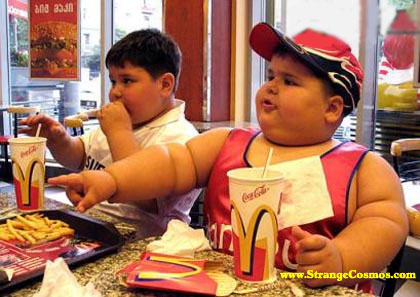 |
| Problem? |
Friday, February 25, 2011
The Sudanese Youth - Societal Expectations
The Trials of the Sudanese youth are beyond comparison. To be displaced across hundreds of miles, enduring countless perils, and still maintain one's humanity is an incredible feat. Then, after this entire ordeal to move to America and try to begin a new life in order to provide for a impoverished family, takes an iron will.

Societal expectations govern nearly all of our actions, and are the core of every society. These expectations vary from society to society, which can cause conflict when one must enter another society. This is demonstrated in the fullest sense for the Sundanese boys. The refugee village that these boys came from was incredibly tight knit, with everyone being familiar with each other. This village also was incredibly impoverished, leading to a debilitating lack of resources.
When these boys were then relocated to America, they encountered an entirely different belief system. Americans are very private, then segregate themselves with single family homes with individual bedrooms. This is nearly the opposite of the Sudanese village, in which, as one of the boy's sister says, 'the group's troubles are your troubles'. Another difference in lifestyles is in our gathering of resources, for in the refugee village the people had little opportunity to make money, or gain a leg up, due to food rationing.n In the United States these youth found that one must work hard and "market" themselves in order to get ahead in our economic system.

Societal expectations govern nearly all of our actions, and are the core of every society. These expectations vary from society to society, which can cause conflict when one must enter another society. This is demonstrated in the fullest sense for the Sundanese boys. The refugee village that these boys came from was incredibly tight knit, with everyone being familiar with each other. This village also was incredibly impoverished, leading to a debilitating lack of resources.
When these boys were then relocated to America, they encountered an entirely different belief system. Americans are very private, then segregate themselves with single family homes with individual bedrooms. This is nearly the opposite of the Sudanese village, in which, as one of the boy's sister says, 'the group's troubles are your troubles'. Another difference in lifestyles is in our gathering of resources, for in the refugee village the people had little opportunity to make money, or gain a leg up, due to food rationing.n In the United States these youth found that one must work hard and "market" themselves in order to get ahead in our economic system.
Subscribe to:
Posts (Atom)